
Tongariro National Park
– A Complete Tourist’s Guide to Tongariro National Park
Book Direct for Best Rates
The Land of Fire and Ice
Welcome to Tongariro National Park (TNP)—New Zealand’s oldest national park and the fourth oldest in the world. But let’s be honest—you’re not just here for the history. You’re here for the volcanic peaks that doubled as Mordor in The Lord of the Rings, the surreal emerald lakes, steaming vents, and landscapes so dramatic they barely look real.
Spanning approximately 80,000 hectares, this park is a UNESCO Dual World Heritage Site, recognised for both its extraordinary volcanic geology and its deep cultural importance to Māori. It’s a place of extremes—tranquil yet powerful, rugged yet beautiful—offering everything from lush native forests and alpine meadows to desert-like terrain and snow-covered volcanoes.
Whether you’re a hardcore hiker, a weekend explorer, or just here for the views, Tongariro delivers.
The Three Giants: Meet the Volcanoes
At the heart of the park stand three active volcanic peaks:
Mount Ruapehu (2,797m)
The tallest in the North Island and home to New Zealand’s largest ski fields. Its crater lake steams constantly—a reminder that it’s still very much alive.
Mount Ngauruhoe (2,291m)
Recognisable as Mount Doom from The Lord of the Rings. A near-perfect cone and culturally sacred, it dominates the landscape (and yes, climbing it is now discouraged out of respect).
Mount Tongariro (1,967m)
Less a single peak and more a volcanic complex of craters, lakes, and steaming vents—the park’s geothermal playground.
All three volcanoes remain technically active, with Tongariro erupting as recently as August 2012, though modern monitoring systems provide early warnings.
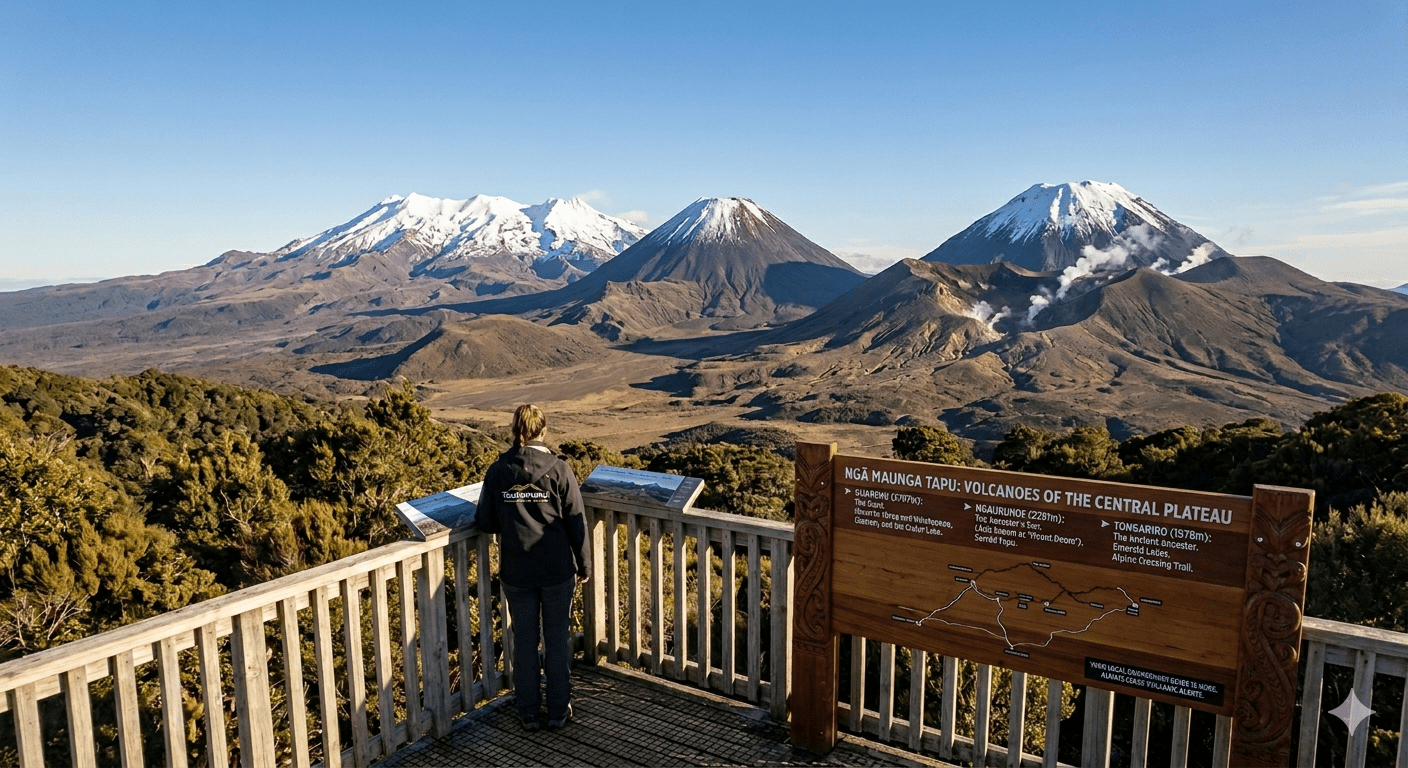
View of the three Mountains
Book Direct for Best Rates
The Main Event: Tongariro Alpine Crossing
The park’s most famous experience—and often called the best one-day hike in the world.
The Stats
- Distance: 19.4 km
- Time: 6–8 hours
- Difficulty: Moderate to Hard
This iconic trek crosses the slopes of all three volcanoes, taking you through steaming craters, ancient lava flows, and vividly coloured lakes.
Highlights
- Devil’s Staircase – A tough climb with massive views
- South Crater – A surreal, flat lunar landscape
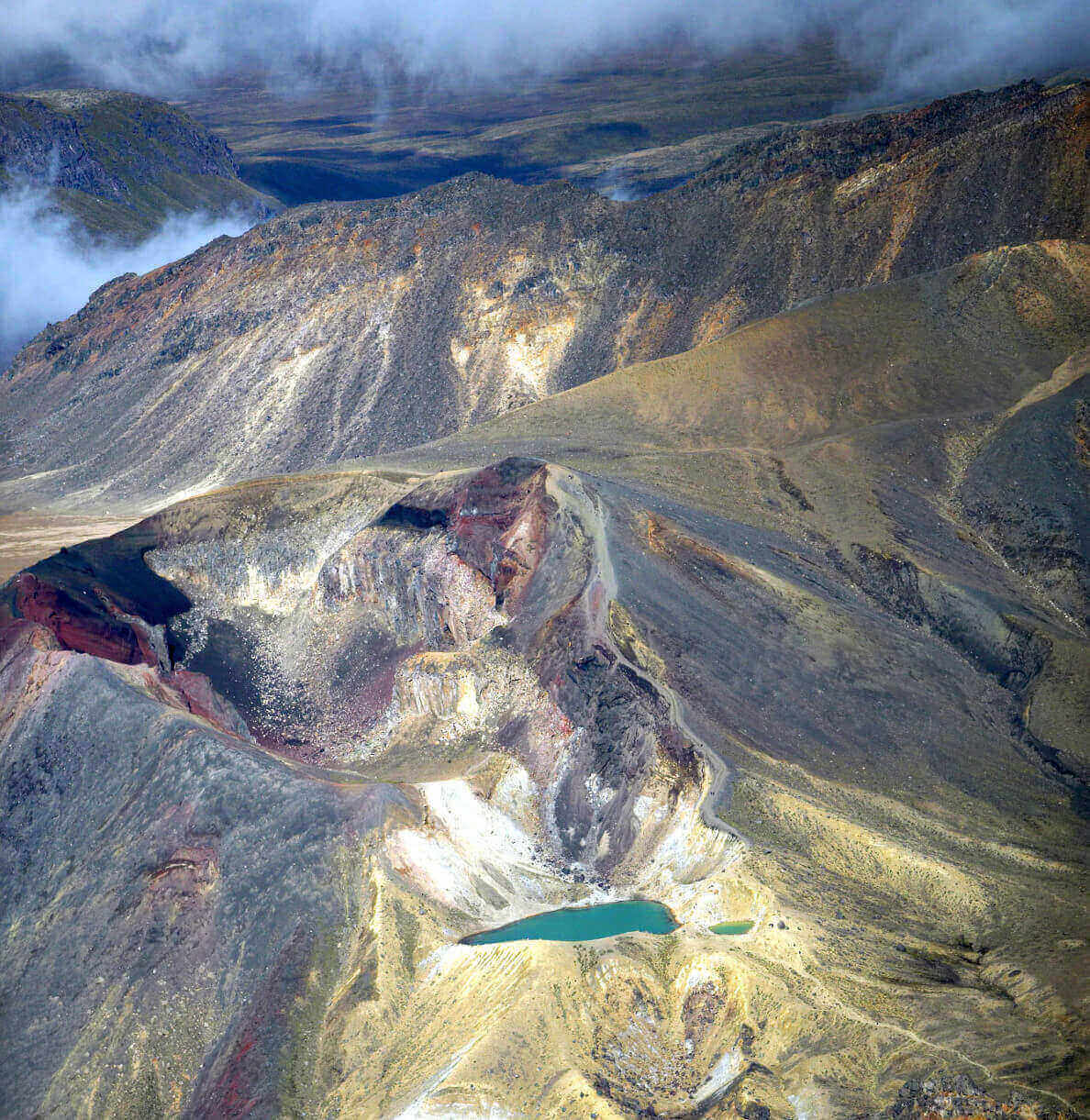
- Red Crater – The highest point, glowing with oxidised rock
- Emerald Lakes – Bright, mineral-rich pools (the famous photo spot)
- Blue Lake – A sacred alpine lake perfect for quiet reflection
Pro tip: Weather here changes fast. Sunshine can turn to sleet in minutes—always check forecasts.
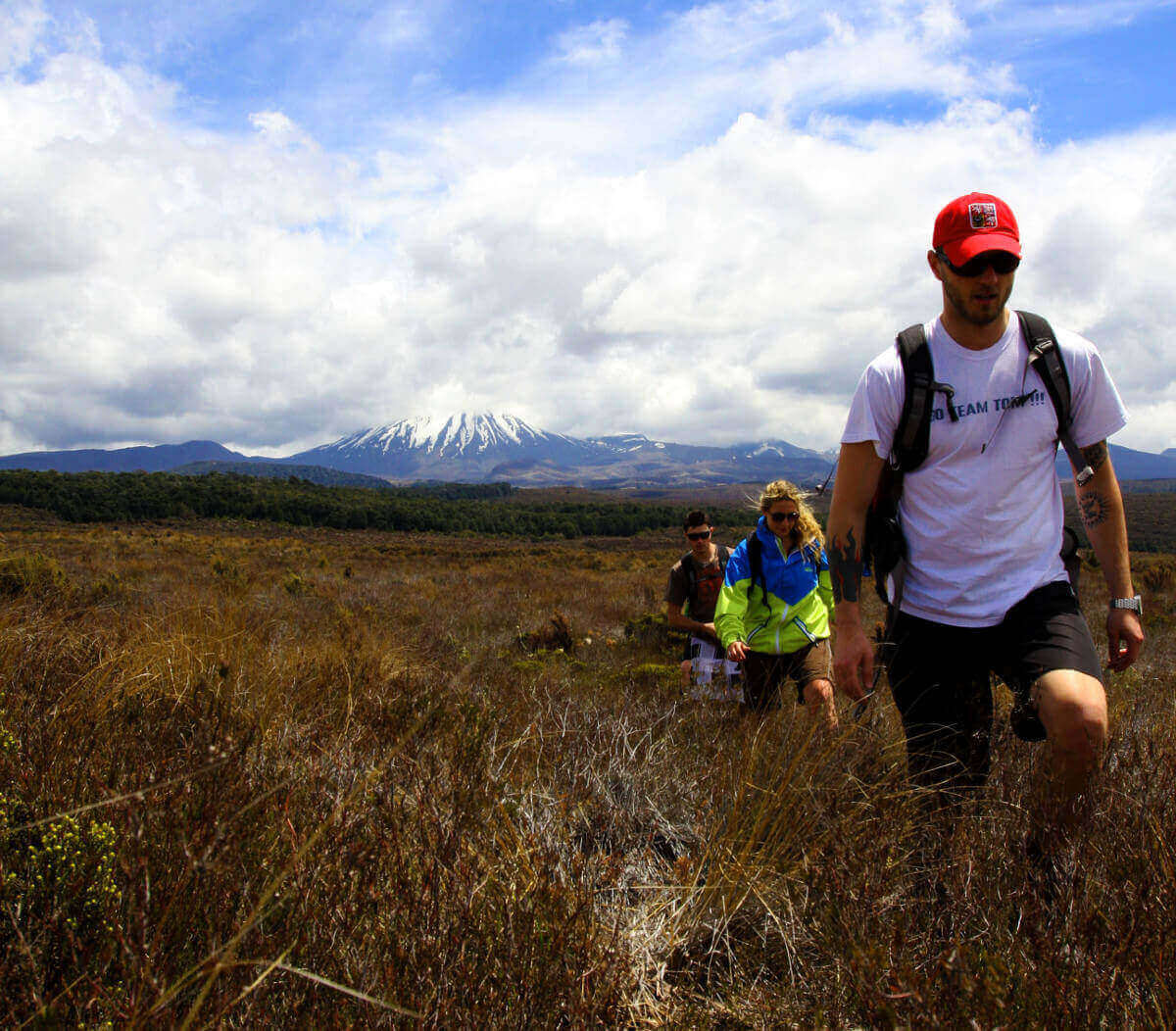
Hiking at Tongariro National Park
Preparation: Don’t Be “That” Tourist
The Crossing is no casual stroll. Every year, people underestimate it.
Essential Packing
- Layered clothing (no denim!)
- Waterproof jacket
- Proper hiking footwear
- Sun protection (NZ UV is intense)
- At least 2L of water
- High-energy food
Winter Magic: Snow & Skiing
In winter, the park transforms into a snow-covered playground.
Whakapapa
New Zealand’s largest ski area, featuring the Sky Waka gondola and stunning alpine views.
Turoa
Famous for wide slopes, long runs, and a lively ski culture near Ohakune.
Other winter activities include sledging, tobogganing, and snow play, making it accessible even for non-skiers.
Short Walks for the Non-Hiker
Not up for 20 km? No problem.
- Taranaki Falls (2 hrs) – Waterfall over ancient lava
- Silica Rapids (2.5 hrs) – Colourful mineral terraces
- Tawhai Falls (20 mins) – “Gollum’s Pool
Activities Beyond Hiking
Tongariro National Park offers a huge range of outdoor experiences:
- Tramping & walking
- Skiing & snowboarding
- Mountain biking
- Horse riding
- Scenic flights
- Rafting & river journeys
- Hunting & fishing
- Sightseeing tours
Film lovers can also explore locations from The Lord of the Rings, where director Peter Jackson brought Mordor—the realm of Sauron—to life.
Where to Stay: Finding Your Basecamp
Taumarunui – The Adventure Hub
A convenient base about 45 minutes from the park, offering access to both Tongariro and the Whanganui River.
Many travellers choose Magpie Cottage in Taumarunui, a charming homestay known for:
- Peaceful semi-rural setting
- Comfortable private suites
- Warm hospitality and thoughtful touches
- Easy access to local attractions
Other Options
- Whakapapa Village – Stay inside the park
- Ohakune – Lively ski town
- Turangi – Quiet and great for fishing
The Cultural Heart: A Sacred Gift
In 1887, Māori chief Te Heuheu Tūkino IV gifted the land to the nation to protect it.
For Māori, these mountains are ancestors—deeply spiritual places.
Respect the land:
- Don’t stand on summits
- Don’t touch or swim in sacred lakes
- Leave no trace
Wildlife to Spot
- Kea – Mischievous alpine parrots
- Whio (Blue Duck) – Rare river bird
- Tui & Bellbirds – Iconic native songbirds
When to Visit
- Summer – Best for hiking
- Autumn – Fewer crowds, crisp air
- Winter – Ski season
- Spring – Waterfalls and unpredictable weather
Getting There & Around
Tongariro National Park is about halfway between Auckland and Wellington (4–5 hours drive).
If you’re doing the Alpine Crossing, book a shuttle—it’s a one-way hike.
The Tongariro National Park Visitor Centre at Whakapapa Village is the main gateway and a great place for information before you explore.
Final Thoughts
Tongariro National Park is more than a destination—it’s an experience. A place where fire meets ice, where ancient culture meets raw natural power, and where every step feels like walking through another world.
It’s peaceful. It’s dramatic. It’s unforgettable.
Just… don’t forget your raincoat.
Quick Reference
| Feature | Detail |
| Established | 1887 |
| Size | ~80,000 hectares |
| Status | UNESCO Dual World Heritage |
| Top Activity | Tongariro Alpine Crossing |
| Volcanoes | Ruapehu, Ngauruhoe, Tongariro |
| Film Location | Mordor (Lord of the Rings) |
| Best Local Stay | Magpie Cottage Taumarunui |